

Introduction
Colombia has become one of Latin America's main bases for remote workers. Since 2022 it has had a digital nomad visa that allows stays of up to two years, Medellín's climate stays around 24°C all year, and rent in most cities is a fraction of North American or European prices.
The cities differ a lot. Medellín went from one of the world's most dangerous cities in the early 1990s to a nomad hub with a metro and cable cars; Bogotá is a cool, high-altitude capital with the country's best restaurants and museums; Cartagena and Santa Marta are hot, expensive-in-season Caribbean cities.
Safety needs more attention than in most nomad destinations: petty theft is common, and the US and UK governments warn about robberies and druggings linked to dating apps, especially in Medellín. This guide covers visas, costs, tax, internet, neighbourhoods and the practical setup, with sources for the key figures.

Medellín, the second-largest city in Colombia
Visa Programs
Here's the rundown — and if you want to weigh these against what other countries offer, our visa comparison tool is worth a look before you decide.
- Tourist Visa: 90 days on arrival for most nationalities, extendable for another 90 days, for a maximum of 180 days per calendar year.
- Digital Nomad Visa: Colombia launched this visa in 2022. It lets remote workers stay for up to 2 years if they hold a passport that doesn't need a visa to visit Colombia and earn at least three times the Colombian minimum wage (COP 5,252,715 a month in 2026). You can't work for Colombian companies or clients on it.
- Retirement Visa (Pensionado): For retirees with a minimum monthly income from a pension or retirement fund.
- Student Visa: For those enrolled in approved Colombian educational institutions.
- Work Visa: For those with a job offer from a Colombian company. Requires employer sponsorship.
- Investment Visa: For those making substantial investments in Colombia (real estate, business, etc.).
- Marriage Visa/Partner Visa: For those married to or in a long-term relationship with a Colombian citizen.
Colombia Digital Nomad Visa Guide
A 15-page printable guide, checked against Cancillería and Migración Colombia sources in October 2026:
- Who qualifies, and the 2026 income threshold
- Document checklists, with an employer letter template
- The online application, step by step
- Your cédula, the 15-day deadline and the 183-day tax rule
Paperwork: For the digital nomad visa you'll need health insurance valid in Colombia, bank statements showing at least three times the minimum wage from abroad in each of the last three months, and apostilled documents (an apostille is the international certificate that makes an official document valid abroad).
Get documents apostilled in the country that issued them before you leave; it can't be done from Colombia.
Cost of Living
Numbers below by city, or use our cost of living calculator to compare Medellín, Bogotá, Cali, Cartagena and Santa Marta for one person or a family.
| City | Monthly Cost (USD) |
|---|---|
| Bogotá | $1,000 - $1,800 |
| Medellín | $900 - $1,600 |
| Cali | $700 - $1,300 |
| Cartagena | $1,100 - $2,000 |
| Santa Marta | $800 - $1,500 |
Rough monthly estimates for one person, for budgeting only, not official statistics. Rent drives most of the range, so check current listings for the neighbourhood you want.
Neighbourhoods: El Poblado in Medellín and Chapinero in Bogotá are where most foreigners live, and rents there reflect it.
In Medellín, Laureles and Envigado are cheaper, more residential and still close to the Metro. In Bogotá, Teusaquillo is a quieter, older neighbourhood with lower rents than Chapinero Alto or Usaquén.
Tax System
Key Tax Information for Expats
- Tax Residency: If you stay in Colombia for more than 183 days in a consecutive 365-day period, you're considered a tax resident.
- Income Tax Rates (2026): Brackets are set in UVT, a tax unit worth COP 52,374 in 2026
- Up to 1,090 UVT (about COP 57.1 million): 0%
- 1,090 - 1,700 UVT: 19%
- 1,700 - 4,100 UVT: 28%
- 4,100 - 8,670 UVT: 33%
- 8,670 - 18,970 UVT: 35%
- 18,970 - 31,000 UVT: 37%
- Over 31,000 UVT: 39%
- Cédula de Extranjería: Foreign ID card required for financial transactions and tax matters.
- Double Taxation Agreements: Colombia has agreements with several countries to prevent double taxation on the same income.
If you become tax resident: after 183 days in any 365-day period, Colombia taxes your worldwide income at the rates above, including remote-work income from abroad. Holding a digital nomad visa doesn't exempt you. Check whether your home country has a tax treaty with Colombia, and get advice from a Colombian accountant before you pass the 183-day mark.
Job Market and Salaries
Colombia's job market for expats is concentrated in several key sectors, with opportunities varying by language proficiency, qualifications, and industry:
- English Teaching: High demand throughout the country, especially in major cities. TEFL/CELTA certification is typically required.
- Technology: Growing tech scene in Medellín (known as the "Silicon Valley of Latin America") and Bogotá, with opportunities for developers, UX/UI designers, and digital marketers.
- Tourism & Hospitality: Opportunities in hotels, tour companies, and restaurants, particularly in tourist destinations like Cartagena and Santa Marta.
- Multinational Companies: Companies like Accenture, IBM, and Amazon have operations in Colombia and occasionally hire English-speaking expats.
- Customer Service: Call centers serving North American markets often recruit native English speakers.
- Oil & Mining: These industries offer some of the highest-paying jobs for qualified expats, mainly in project management and engineering roles.
Most Popular Nomad/Expat Cities

Medellín
They call it the City of Eternal Spring because it sits around 24°C all year. Medellín has turned itself around since the 1990s, and in 2013 it was named the world's most innovative city in a Wall Street Journal and Citi contest. Add a good metro, cable cars up the hillsides and a big expat community, and it's easy to see why so many nomads end up here. Great for: Remote workers, tech professionals, and those seeking a balanced lifestyle.

Bogotá
Colombia's capital and largest city has the best restaurants, museums and nightlife in the country. Situated at high altitude (8,660 feet), its cooler climate and business opportunities attract professionals and entrepreneurs. Great for: Career-focused expats, culture enthusiasts, and urban dwellers.

Cartagena
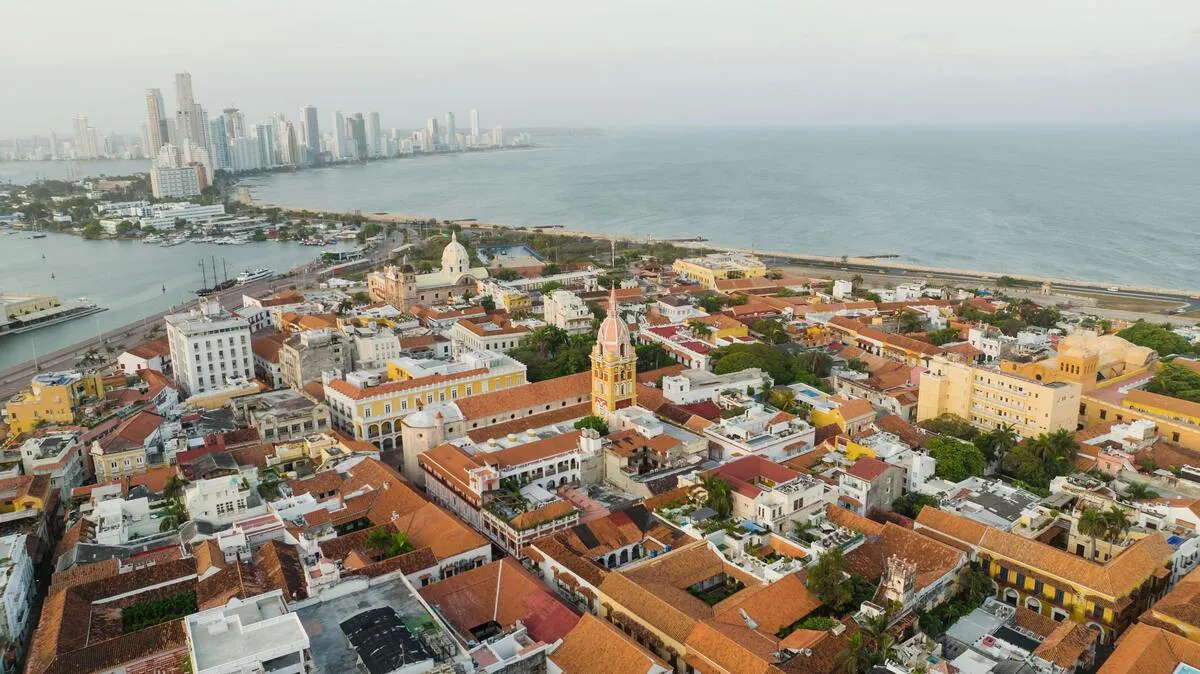
Cartagena's walled old town is a UNESCO World Heritage Site, full of colourful colonial houses, and the beaches are close by. While more touristic and expensive than other Colombian cities, its charm and romantic atmosphere are unmatched. Great for: History lovers, photographers, and those seeking coastal living.

Santa Marta, on the Caribbean coast
Santa Marta
The gateway to Tayrona National Park offers a more relaxed Caribbean lifestyle than Cartagena, with lower costs, and beaches and the Sierra Nevada mountains on your doorstep. Its growing digital nomad scene makes it attractive for those seeking beach living with decent infrastructure. Great for: Beach lovers, outdoor enthusiasts, and budget-conscious expats.
Estratos: every residential property in Colombia is rated from estrato 1 to 6. The rating sets utility prices (higher estratos pay more and subsidise lower ones) and is a rough guide to the area.
Most foreigners rent in estratos 4-6. Estrato 3 areas, such as parts of Laureles in Medellín, can be cheaper and perfectly comfortable, but conditions vary street by street, so visit at different times of day before signing.
Culture and Lifestyle

Cumbia dancers at the Barranquilla Carnival Photo: Norma Gòmez, CC BY 2.0, via Wikimedia Commons
Colombian culture is characterized by warmth, passion, and a love for celebration:
- Social Dynamics: Relationships are prioritized over schedules. Expect warm greetings, physical proximity, and invitations to social gatherings.
- Food Culture: Colombian cuisine varies by region, with staples like arepas, bandeja paisa, and ajiaco. Meals are social affairs, often lasting hours with family and friends.
- Music & Dance: Music is integral to Colombian life, from salsa and cumbia to vallenato and reggaeton. Dancing is a social necessity and learning a few steps will help you integrate.
- Coffee Culture: Beyond its world-famous export, coffee is central to daily life, with afternoon "tinto" breaks being a common social ritual.
- Festivals: From Carnaval de Barranquilla to Medellín's Flower Festival and the Cali Fair, there's a big festival somewhere in Colombia most months of the year.
Entertainment and Activities
Colombia offers diverse entertainment options and activities for all interests:
- Outdoor Adventures: Trek to the Lost City, explore coffee plantations, hike in Cocora Valley with its wax palms, or discover pristine beaches in Tayrona National Park and the Pacific coast.
- Arts & Culture: Visit Botero Museum in Bogotá, explore street art in Comuna 13 (Medellín), or experience Gabriel García Márquez's magical realism in Cartagena.
- Sports: Football ignites national passion—watch a match between Atlético Nacional and Millonarios for an unforgettable experience. Cycling is also enormously popular.
- Nightlife: From Medellín's Parque Lleras to Bogotá's Zona Rosa and Cartagena's Getsemaní, Colombia's nightlife ranges from sophisticated rooftop bars to energetic salsa clubs.
- Eco-Tourism: Colombia is one of the world's most biodiverse countries, with opportunities for whale watching on the Pacific coast, bird watching in the cloud forests, and Amazon adventures.
Free things to do: every Sunday and public holiday, Bogotá's Ciclovía closes more than 120 km of roads to cars from 7am to 2pm for cyclists, runners and skaters, and Medellín runs a smaller version.
Many museums have free entry on certain days, including Bogotá's Museo del Oro on Sundays, and city parks host free concerts, especially around festivals. Check each museum's site for current free days.
Tips for New Expats

Ruta N, the city-backed innovation centre at the heart of Medellín's startup scene Photo: Yimicorrea, CC BY-SA 3.0, via Wikimedia Commons
- Learn Spanish: While some Colombians in major cities speak English, learning Spanish is essential for daily life, building relationships, and navigating beyond tourist areas.
- Safety Awareness: Colombia has made tremendous strides in safety, but common-sense precautions remain important. Avoid displaying valuables, use registered taxis or ride-sharing apps, and research neighborhoods before visiting.
- Get Your Cédula de Extranjería: You'll need this foreign ID card for opening bank accounts, getting a phone plan, signing leases, and conducting daily business.
- Understand the Strata System: Colombian neighborhoods are classified from estrato 1 (lowest socioeconomic level) to 6 (highest). This affects utility costs, safety, and infrastructure.
- Healthcare Planning: Colombia offers excellent, affordable healthcare. Expats can join the public EPS system or purchase private insurance (recommended for faster service and English-speaking doctors).
- Banking Considerations: Opening a bank account can be challenging for new arrivals. Consider using wise.com or other international banking solutions initially, then establish a local account once settled.
- Altitude Adjustment: If moving to Bogotá (8,660 feet), allow time to adjust to the altitude. Drink plenty of water, avoid alcohol initially, and take it easy for the first few days.
Spanish is essential for daily life in Colombia, where English proficiency is lower than in some other Latin American countries. Even basic Spanish phrases will significantly improve your experience and show respect for the local culture. Colombians are generally patient and appreciative of foreigners' attempts to speak their language.
Pro Tip: When learning Colombian Spanish, focus on understanding the unique slang ("parcero," "bacano," "chevere") and regional accents. The Spanish spoken in Medellín is considered among the clearest and easiest to understand for learners, making it an ideal place to study the language.
Digital Nomad Resources
Colombia has become a top destination for digital nomads in Latin America, particularly after introducing its digital nomad visa in 2022. Here's what you need to know about working remotely from Colombia:
Internet & Connectivity
Home internet in Colombia's cities is fast; mobile data is the weak spot. The Speedtest Global Index for August 2026 puts the national median at 231 Mbps for fixed broadband (28th in the world) and 45 Mbps on mobile (83rd).
- Fixed Broadband: Fibre is common in apartments in the main cities; speeds in smaller towns and on the coast are lower
- Mobile Data: 4G coverage is widely available in urban areas, with 5G being implemented in major cities
- Internet Reliability: Generally reliable in urban areas, though occasional outages can occur
- Internet Plans: Starting from $20-30 USD/month for home connections
- Before you rent: ask the landlord for a recent speed test, especially in Santa Marta and smaller towns
Top Coworking Spaces
The large chains are the most reliable option; smaller spaces open and close often, so check current hours and prices before you go:
Medellín
- WeWork - El Poblado location with day passes
- Spaces - Several locations, from El Poblado to Centro
Bogotá
- WeWork - Three locations in the business districts
- Regus and Spaces - Several locations across the city
Cartagena & Santa Marta
- Tu Work Coworking - Bocagrande, Cartagena
- In Santa Marta, most remote workers use cafés or hostel coworking areas; options change often
Working from cafés: specialty cafés in the main cities are generally fine with laptops. In Medellín, Pergamino in El Poblado is the best known; in Bogotá, Azahar; in Cartagena, Café del Mural in Getsemaní. Order something every couple of hours and avoid taking a big table at lunchtime.
Popular Digital Nomad Areas
- El Poblado & Laureles (Medellín) - The most popular districts for digital nomads in Colombia, with numerous cafés, coworking spaces, and international restaurants
- Chapinero & Usaquén (Bogotá) - Trendy neighborhoods with excellent connectivity and digital nomad infrastructure
- Getsemaní & Bocagrande (Cartagena) - Getsemaní for street art and nightlife, Bocagrande for the beach and high-rise apartments
- Taganga & Rodadero (Santa Marta) - Beach areas attracting nomads seeking coastal living with decent connectivity
- Salento (Coffee Region) - For those seeking tranquility in Colombia's scenic coffee country
Expat Communities & Networking
Colombia's big cities all have sizeable expat communities, so it's easy to connect and build your social network:
- Facebook Groups: Join active communities like "Expats in Medellín," "Bogotá Expat," "Digital Nomads Colombia," and "Expats in Cartagena" for advice, events, accommodation, and job opportunities.
- Meetup Events: The Meetup.com platform hosts regular gatherings for language exchange, professional networking, hiking, and special interests in Colombia's major cities.
- Language Exchanges: "Intercambios" are popular throughout Colombia and provide opportunities to improve your Spanish while meeting locals and other expats.
- Professional Associations: AmCham Colombia (American Chamber of Commerce) and other country-specific chambers host networking events for professionals.
- Sports Groups: Join hiking clubs, football leagues, yoga communities, or cycling groups to stay active while expanding your social circle.
Colombian culture emphasizes social connections, making it relatively easy to build relationships. Expats often comment on the warmth and friendliness of Colombians, who generally welcome foreigners and are curious about other cultures.
Spanish Language Resources
Learning Spanish is essential for making the most of your experience in Colombia:
- Recommended Learning Resources:
- Apps: Duolingo, Babbel, SpanishDict, and Memrise
- Online Courses: BaseLang (specialized in Colombian Spanish), SpanishPod101, italki
- Books: "Colombian Spanish," "Lonely Planet Colombian Spanish Phrasebook"
- Useful Everyday Phrases:
- Hello: Hola (OH-lah)
- Thank you: Gracias (GRAH-see-as)
- Please: Por favor (por fah-VOR)
- How much?: ¿Cuánto cuesta? (KWAN-toh KWES-tah)
- Very good: Muy bueno (MOO-ee BWAY-no)
- Nice to meet you: Mucho gusto (MOO-cho GOOS-toh)
- Cool/Great: Chevere (cheh-VEH-reh) - Colombian slang
- Language Schools in Major Cities:
- Medellín: Colombia Immersion, Toucan Spanish, Total Spanish
- Bogotá: Nueva Lengua, Whee Institute, Berlitz
- Cartagena: Centro Catalina, Nueva Lengua Cartagena
- Santa Marta: Neotropical Spanish School, La Brisa Loca Spanish School
Colombian Spanish is generally considered among the clearest and easiest to understand in Latin America, particularly the accent from Bogotá and Medellín. However, be prepared for unique colloquialisms and regional variations that add color to the language.
Local Spanish: "¿Qué más?" means "what's up?", "bacano" means great, and "parcero" or "parce" means mate.
The one to know is "no dar papaya": don't make yourself an easy target. You'll hear it as safety advice, for example about using your phone on the street.
The Bottom Line
Colombia offers a two-year digital nomad visa with a moderate income bar (COP 5.25 million a month in 2026), low rents outside the expat neighbourhoods, and fast home internet in the cities. The trade-offs are safety, which takes real attention, slow mobile data, and paperwork that mostly happens in Spanish.
If you're weighing it up, start with the income test and the apostille requirements for the visa, then pick a city by climate: Medellín for spring weather, Bogotá for a cooler capital, or the Caribbean coast for heat and beaches.