


Introduction
Spain offers non-EU citizens two main ways to live there without a local job: the digital nomad visa for remote workers (about €2,850 a month in 2026) and the non-lucrative visa for people living on savings or passive income. Both lead to EU residence, and new residents who qualify can use the Beckham Law's flat 24% tax rate for six years.
Daily life runs later than in most of Europe: lunch around 2pm is the main meal and dinner rarely starts before 9pm. Healthcare is good, public transport in the big cities is excellent, and outside Madrid and Barcelona rents are moderate.
The downsides: paperwork is slow and appointment-based, rents in central Madrid and Barcelona have risen sharply, the Golden Visa closed in April 2025, and you'll need Spanish for most official processes. This guide covers the visas, costs, tax, cities and practical setup, with sources for the key rules.

The Sagrat Cor church on Tibidabo, the hill behind Barcelona
Visa Programs
Spain's visa landscape has shifted a lot in the last few years. Quick rundown below, or run these against other countries' options in our visa comparison tool.
- Tourist Visa (Schengen): 90 days within a 180-day period for non-EU citizens. Ideal for initial exploration.
- Digital Nomad Visa: For remote workers employed by, or freelancing for, companies outside Spain (since 2023). Up to 5 years in total; the income bar is about twice the Spanish minimum wage (around €2,850 a month in 2026).
- Non-Lucrative Visa: For those with sufficient savings or passive income who don't plan to work in Spain. Valid for 1 year, renewable.
- Student Visa: For those enrolled in Spanish educational institutions. Popular for language learning.
- Work Visa: For those with a job offer from a Spanish company. Requires employer sponsorship.
- Golden Visa: Closed. Spain abolished residence-by-investment on 3 April 2025 (Organic Law 1/2025); only applications filed before then are still processed.
- Family Reunification Visa: For family members of Spanish residents or citizens.
Spain Non-Lucrative Visa Guide
The 15-page printable version, checked against Spanish government sources in October 2026:
- 2026 income figures by household and every official fee
- Tick-box document checklist with where to get each item
- The one-month visa and TIE deadlines, and the 183-day renewal rule
- Printable progress tracker, cover letter and budget worksheet
Digital nomad visa paperwork: you must have worked for your employer or main clients for at least three months, the company must have been operating for at least a year, and you need to show income above the threshold, usually with recent payslips or invoices and bank statements. A degree or three years' professional experience is also required.
Documents not in Spanish need a sworn translation (traducción jurada), and most foreign public documents also need an apostille. Missing translations are a common cause of delays, so arrange them before you apply.
Cost of Living
City breakdown below, or run your own lifestyle through our cost of living calculator for a number tailored to you.
| City | Monthly Cost (USD) |
|---|---|
| Madrid | $1,500 - $2,800 |
| Barcelona | $1,600 - $3,000 |
| Valencia | $1,200 - $2,200 |
| Seville | $1,100 - $2,000 |
| Málaga | $1,300 - $2,500 |
Rough monthly estimates for one person, for budgeting only, not official statistics. Rent drives most of the range, so check current listings for the neighbourhood you want.
Rent: central Madrid and Barcelona take a big share of most budgets. Commuter rail and metro links are good, so living 20-30 minutes out costs noticeably less.
Getafe near Madrid and L'Hospitalet de Llobregat next to Barcelona are two examples: both are on the metro or commuter rail, with rents well below the city centres.
Tax System

Spain's tax agency, the Agencia Tributaria, works out of offices like this one in Cartagena Photo: P4K1T0, CC BY-SA 4.0, via Wikimedia Commons
Key Tax Information for Expats
- Tax Residency: If you stay in Spain for more than 183 days in a calendar year, you're considered a tax resident.
- Income Tax Rates (combined state and regional scale; regions vary):
- Up to €12,450: 19%
- €12,451 - €20,200: 24%
- €20,201 - €35,200: 30%
- €35,201 - €60,000: 37%
- €60,001 - €300,000: 45%
- €300,001+: 47%
- NIE (Número de Identidad de Extranjero): Foreign ID number required for all financial transactions, including tax filing.
- Beckham Law: Special tax regime for new residents allowing eligible new residents to pay a flat 24% on employment income up to €600,000 (47% above that) for the year they arrive plus five more. Details in our tax guide.
- Double Taxation Agreements: Spain has agreements with many countries to prevent double taxation on the same income.
Personal connections: in Spain, a lot of jobs are filled through contacts ("enchufe") before they're advertised.
If you're looking for local work, industry meetups, professional associations and language exchanges are the practical way to build those contacts.
Job Market and Salaries
Spain's job market for expats is concentrated in several key sectors, with opportunities varying significantly by region and language proficiency:
- English Teaching: Consistently high demand, especially in major cities. The TEFL certification is typically required.
- Technology: Growing tech hubs in Madrid, Barcelona, and Valencia with increasing opportunities for skilled developers, designers, and project managers.
- Tourism & Hospitality: Abundant opportunities, especially in coastal regions and major cities. Spanish language skills are often required.
- Multinational Companies: Companies like Amazon, Google, and Microsoft have offices in Spain and occasionally hire English-speaking expats.
- Customer Service: International call centers often recruit native English speakers and other language specialists.
Most Popular Nomad/Expat Cities

Madrid
Spain's capital has fast trains in every direction, the Prado and the Reina Sofía, and more international companies than anywhere else in the country. It's also the easiest base for weekend trips. Great for: Career-focused expats and culture lovers.

Barcelona
Gaudí buildings, city beaches and a busy startup scene. Barcelona has been an expat favourite for decades, and the rents show it. Great for: Digital nomads, creatives, and beach lovers.

Valencia
Spain's third-largest city has long beaches, lower rents than Madrid or Barcelona, the City of Arts and Sciences, and fewer tourists than Barcelona. Great for: Families, budget-conscious expats, and those seeking balance.

Pro Tip: To truly experience Spanish culture, adjust your schedule to the local rhythm. Have a light breakfast, a substantial lunch around 2pm, and dinner after 9pm. You'll stop turning up to empty restaurants, and you'll get invited out a lot more.
Culture and Lifestyle

A lot of Spanish social life happens over a plate like this Photo: Gerda Arendt, CC0, via Wikimedia Commons
Spain's lifestyle is characterized by its relaxed pace and emphasis on enjoying life's pleasures:
- Daily Schedule: The Spanish day runs later than in most countries. Lunch (2-4pm) is often the main meal, with dinner rarely before 9pm.
- Food Culture: Food is central to Spanish life, with emphasis on fresh ingredients and social dining. Tapas, paella, and regional specialties vary across the country.
- Siesta: While less common in major cities, many businesses still close for a few hours in the afternoon, especially in smaller towns.
- Socializing: Spain's social culture happens in public—in plazas, cafes, and bars—rather than private homes. Spaniards prioritize family and social connections.
- Festivals: From La Tomatina to Semana Santa to local fiestas, Spain's calendar is full of celebrations, and most towns have at least one fiesta of their own.
Entertainment and Activities
Spain offers a wealth of activities for expats to enjoy year-round:
- Outdoor Adventures: From hiking in the Picos de Europa to surfing in the Basque Country or skiing in the Sierra Nevada, Spain's diverse geography offers endless outdoor pursuits.
- Arts & Culture: Big-name museums (Prado, Reina Sofía, Guggenheim Bilbao), old towns worth wandering, and live music and theatre in every major city.
- Sports: Football (soccer) is a national passion. Attending a Real Madrid or FC Barcelona match is an unforgettable experience. Tennis, cycling, and watersports are also popular.
- Food & Wine Tourism: Wine regions like La Rioja and Ribera del Duero offer tastings and tours. Culinary tours and cooking classes are available in most cities.
- Nightlife: Spain's nightlife is legendary, with clubs often not filling until after midnight and continuing until morning, especially in Madrid, Barcelona, and Ibiza.
Pro Tip: For affordable cultural experiences, take advantage of free museum days (many state museums offer free entry on Sunday afternoons or specific weekday evenings) and municipal cultural centers which offer high-quality concerts, exhibitions, and workshops at minimal cost.
Tips for New Expats

Coworking spaces are easy to find in Madrid and Barcelona. This one is in Barcelona's Poblenou Photo: Gustavo Franco Cruz, CC BY-SA 4.0, via Wikimedia Commons
- Learn Basic Spanish: While English is widely spoken in tourist areas and among younger Spaniards, learning Spanish will significantly improve your experience and integration.
- Patience with Bureaucracy: Administrative processes can be slow and paper-heavy. Allow plenty of time for visa applications, residency permits, and setting up utilities.
- Embrace the Schedule: Adjust to Spanish timing rather than fighting it. Small shops, especially outside the big cities, often close from about 2pm to 5pm, and many restaurants don't open for dinner until 8pm.
- Get Your NIE Early: This identification number is essential for renting apartments, opening bank accounts, getting a phone plan, and more.
- Join Expat Groups: Facebook groups, InterNations, and Meetup events are great ways to find community and practical advice during your transition.
- Healthcare Planning: Spain has excellent public healthcare, but you'll need to register. EU citizens should bring their EHIC/GHIC cards, while non-EU expats typically need private insurance initially.
- Choose Location Carefully: Each region of Spain has its own distinct culture, climate, and sometimes language. Visit different areas before deciding where to settle.
Spanish is a relatively easy language for English speakers to learn compared to many other languages. Most expats find that even basic Spanish phrases open doors and help build goodwill in daily interactions. Regional languages like Catalan, Basque, and Galician are also spoken in their respective regions, but Spanish (Castellano) is understood throughout the country.
Pro Tip: When learning Spanish, focus first on irregular verbs like "ser," "estar," "ir," and "tener," as these are used constantly in everyday conversation. The language learning app HelloTalk pairs you with native Spanish speakers looking to learn your language for free conversation practice, which is perfect for improving your real-world Spanish skills.
Digital Nomad Resources
Spain has become a top destination for digital nomads, especially with the introduction of its digital nomad visa in 2023. Here's what you need to know about working remotely from Spain:
Internet & Connectivity
Home internet is fast and mobile data is slower. The Speedtest Global Index for August 2026 puts Spain's national median at 263 Mbps for fixed broadband (18th in the world) and 84 Mbps on mobile (55th).
- Fixed Broadband: Spain has one of the highest fibre-to-the-home coverage rates in the EU
- Mobile Data: 4G/5G coverage is excellent across the country with affordable data plans
- Internet Reliability: Connection quality is consistently good in major cities and tourist areas
- Internet Plans: Starting from €30/month for fiber optic connections (300-600 Mbps)
Top Coworking Spaces
Spain's major cities offer excellent coworking options:
Madrid
- Impact Hub - Multiple locations, strong community
- Spaces Madrid - Modern facilities, central locations
- Utopicus - Beautiful design, multiple locations
- WeWork - International standard facilities
Barcelona
- Aticco - Rooftop terrace, networking events
- OneCoWork - Prime locations including marina
- Spaces Barcelona - Modern design, multiple locations
- Betahaus - Community-focused space
Valencia & Málaga
- Wayco (Valencia) - Central location, great amenities
- Promálaga Coworking (Málaga) - City-run spaces aimed at startups and freelancers
- La Térmica (Málaga) - Cultural centre with a coworking programme for creatives
Pro Tip: Spain runs on café culture. Many cafés welcome remote workers and offer free WiFi, making them perfect for occasional work sessions. Recommended chains include Café & Té, La Rollerie, and Starbucks.
Popular Digital Nomad Areas
- Malasaña & Chamberí (Madrid) - Hip neighborhoods with numerous cafés and coworking spaces
- Poblenou (Barcelona) - Tech district with innovative spaces and beach proximity
- Ruzafa (Valencia) - Creative neighborhood with cafés and affordable living
- Soho (Málaga) - Arts district close to the beach with growing digital nomad scene
- Las Palmas (Gran Canaria) - Year-round warm weather, affordable living, and nomad community
Friend Bonus Tip REC.ON Spain Ecovillage
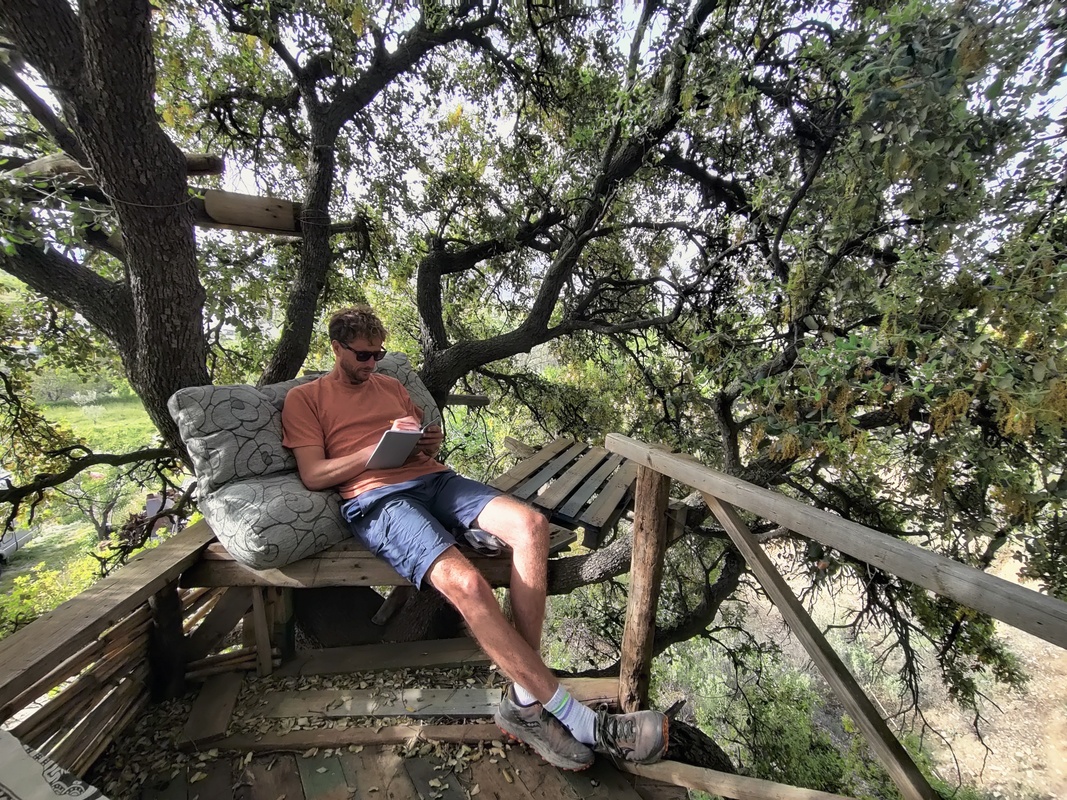
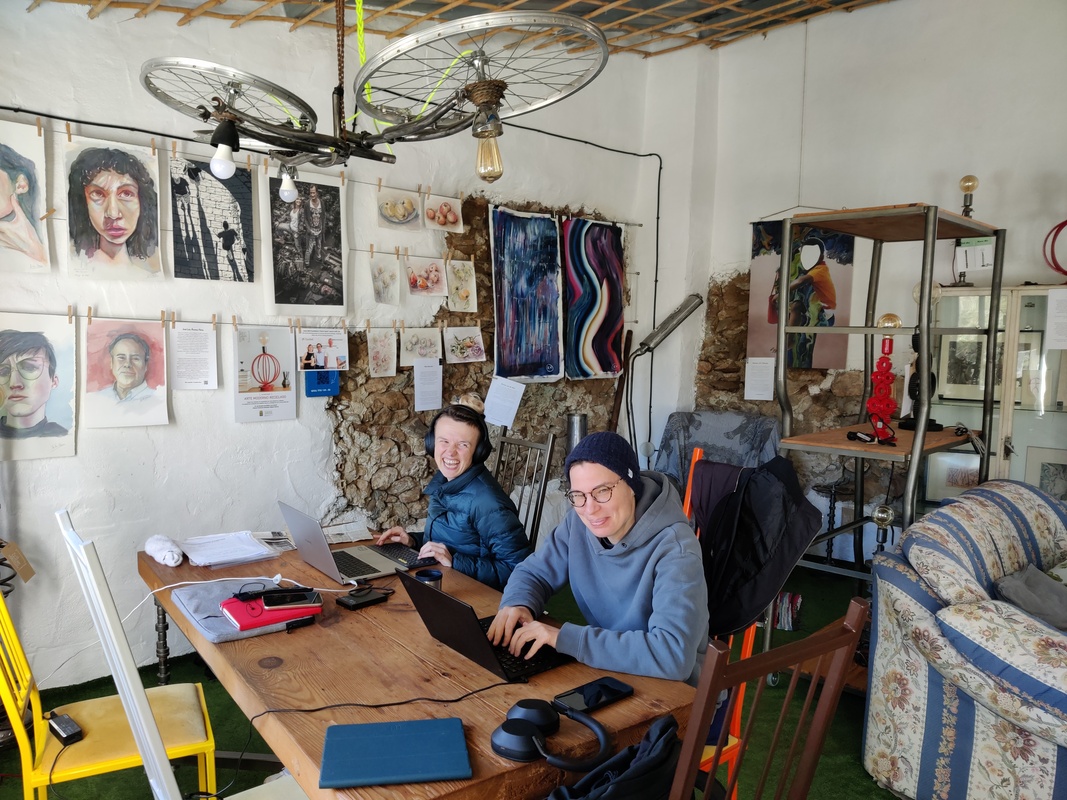
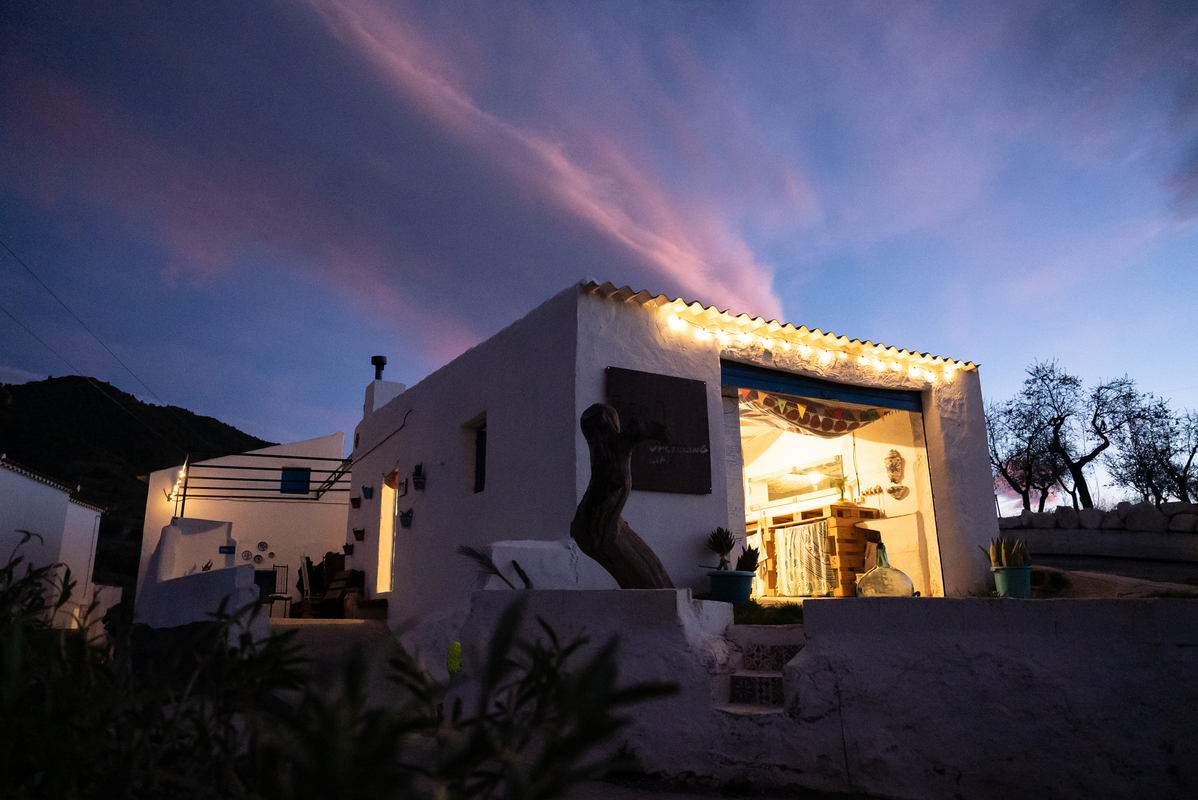
REC.ON Spain is an ecovillage and coliving art residency in La Mata Bolaimi, a 10-house village in the Sierra María-Los Vélez mountains of Andalusia. Bart and Paulina Bielecki started it in 2019 on a former goat farm, restoring buildings that are more than 100 years old.
It's built around art, ecology and community, and it draws artists, writers, nomads and people recovering from burnout. If you want somewhere quiet to work on a project, or just to slow down for a few weeks, it's worth a look.
Coliving & Coworking in the Ecovillage
The setup is aimed at nomads, travellers and anyone wanting a slower few weeks. They offer coliving rooms, a Green Spot for RVs and coworking spaces for remote work. You can connect with a community of people with similar values. There are opportunities for hiking, meditation or taking part in creative workshops.
Learn more: www.rec-on.es
Expat Communities & Networking
Every big Spanish city has a large expat community, so meeting other internationals isn't hard:
- Facebook Groups: Join active communities like "Expats in Madrid," "Barcelona Expats," "Expats in Valencia," and "Costa del Sol Expats" where members share advice, events, accommodation, and job opportunities.
- Meetup Events: The Meetup.com platform is very active in Spanish cities with regular gatherings for language exchange, professional networking, hiking, and special interests.
- Language Exchanges: "Intercambios" are popular throughout Spain and offer opportunities to improve your Spanish while helping locals with English or other languages.
- Professional Associations: Organizations like the American Club of Madrid, British Chamber of Commerce, and other country-specific chambers host networking events for professionals.
- Sports Clubs: Join football leagues, hiking groups, tennis clubs, or yoga communities to stay active while expanding your social circle.
One of the major advantages of living in Spain is the open social culture, which makes it relatively easy to make connections, especially if you make an effort to learn some Spanish and participate in local activities.
Spanish Language Resources
While English is widely spoken in tourist areas and among younger Spaniards, learning Spanish will significantly enhance your experience in Spain:
- Recommended Learning Resources:
- Apps: Duolingo, Babbel, SpanishDict, and Memrise
- Online Courses: SpanishPod101, italki (for finding tutors), Lingoda
- Books: "Madrigal's Magic Key to Spanish," "Practice Makes Perfect: Complete Spanish Grammar"
- Useful Everyday Phrases:
- Hello: Hola (OH-lah)
- Thank you: Gracias (GRAH-see-as)
- Please: Por favor (por fah-VOR)
- How much?: ¿Cuánto cuesta? (KWAN-toh KWES-tah)
- Delicious: Delicioso (deh-lee-SYOH-soh)
- Nice to meet you: Encantado/a (en-kahn-TAH-doh/dah)
- Language Schools in Major Cities:
- Madrid: Cervantes Escuela Internacional, AIL Madrid, Enforex
- Barcelona: Don Quijote, Speakeasy, BCN Languages
- Valencia: Hispania Valencia, Taronja School, Costa de Valencia
- Málaga: Cervantes Escuela Internacional, CLIC International House
The Bottom Line
Spain suits remote workers and people with passive income who want EU residence, good healthcare and a city with real public transport. The trade-offs are slow, Spanish-only paperwork and high rents in the two biggest cities.
If you're deciding, check whether your income fits the digital nomad or non-lucrative visa, look at whether you'd qualify for the Beckham Law before you arrive, and compare Valencia or Málaga with Madrid and Barcelona on rent.